1123Exosome-Like Nanoparticles from Red, Gold, and Green Kiwifruit: Isolation, Characterization and Iron Entrapment and Localization
a:Banaras Hindu University
b:Riddet Institute, Massey University, Private Bag 11222, Palmerston North, 4442, New Zealand
Fruit-derived exosome-like nanoparticles (ELNs) are increasingly recognized as naturally occurring, food-compatible nanocarriers capable of encapsulating bioactive compounds such as antioxidants and vitamins. Their inherent biocompatibility positions them as promising candidates for functional food and nutraceutical formulations. Despite this potential, limited work has explored their capacity for nutrient encapsulation and delivery across diverse fruit cultivars.
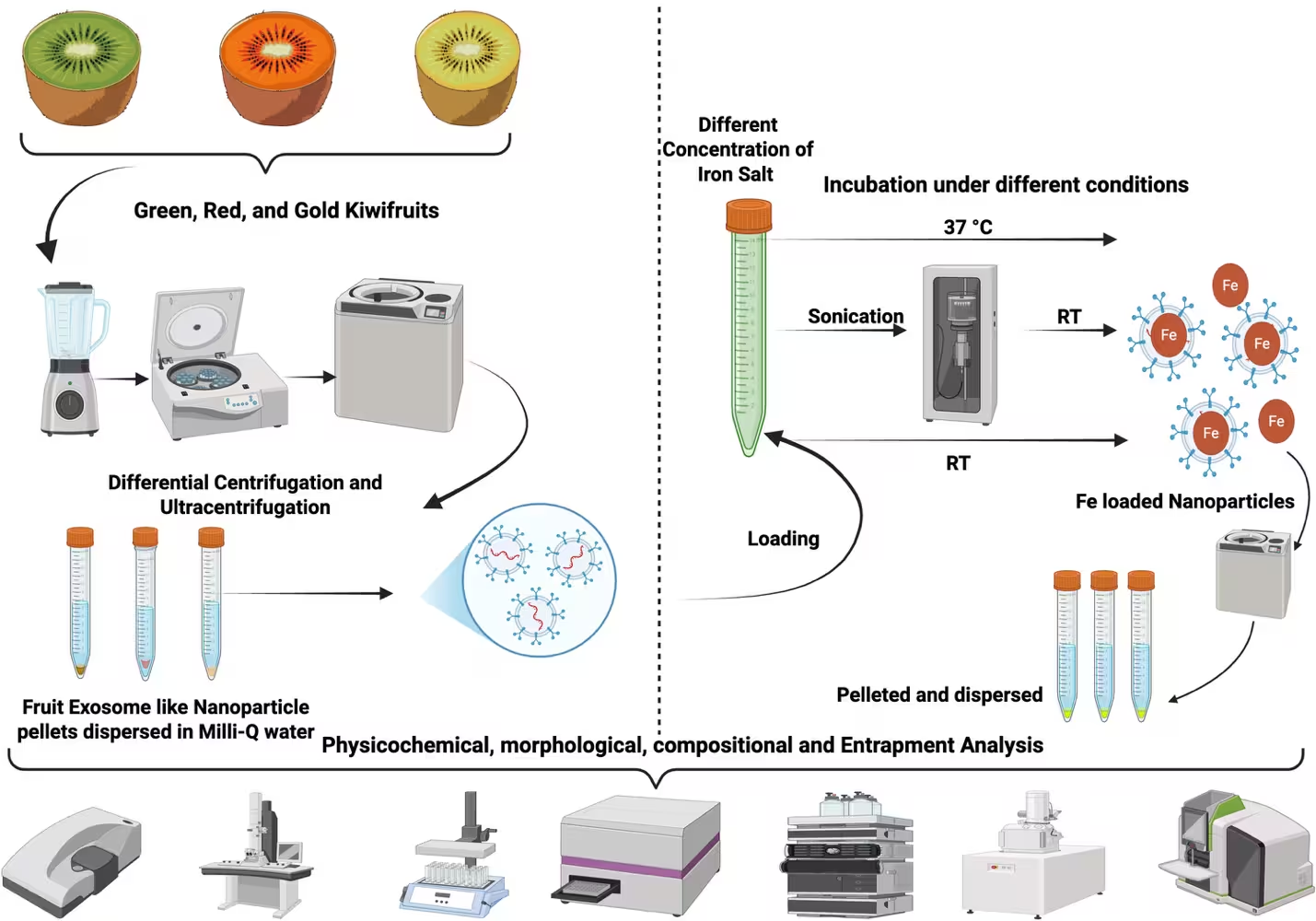
In this study, ELNs were isolated and characterized from red, gold, and green kiwifruit, and their ability to entrap and localize iron was investigated. Kiwifruit ELNs were isolated through differential ultracentrifugation, yielding 5.00-6.00 mg/mL (approximately 0.50-0.60 % of filtered juice). The vesicles exhibited average hydrodynamic diameters between 215 and 225 nm with ζ-potential values ranging from -26.4 to -28.7 mV. Transmission electron microscopy revealed spherical, bi-layered nanostructures with consistent morphology across cultivars. The ELNs demonstrated notable antioxidant activity (30-55 % inhibition in DPPH and ABTS assays) and contained vitamin C in the range of 0.610 ± 0.020, 0.424 ± 0.015, and 0.325 ± 0.010 nmol/µg dry pellet for red, gold, and green kiwifruit, respectively.
Iron was selected as a model micronutrient because of its global deficiency and the intrinsic ascorbate content of kiwifruit ELNs, which supports non-heme iron absorption. Loading experiments using 200-2000 ppm Fe achieved maximum loading capacities of 12.38-12.53 mg Fe/g ELN (dry weight basis) and up to 84 % entrapment efficiency, with sonication-assisted incorporation further enhancing iron uptake while maintaining vesicle integrity. No significant differences were observed among cultivars in terms of iron-loading behaviour or stability, indicating consistent performance across kiwifruit types. Elemental mapping confirmed the internal localization of iron within the vesicles, representing the first such evidence for fruit-derived extracellular nanovesicles.
Overall, the findings highlight the potential of kiwifruit-derived ELNs as stable, antioxidant-rich, and food-compatible nanocarriers for micronutrient delivery, exhibiting reproducible and robust performance across different cultivars.
Relevant Theme: Innovative hydrocolloid design for delivering optimal nutrition and functional foods