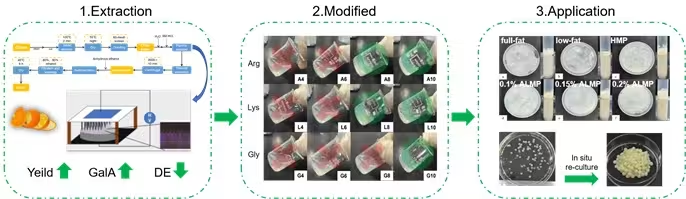
Conventional low-methoxyl pectin (LMP) gels form primarily through electrostatic "egg-box" crosslinks with Ca²⁺, often resulting in brittle textures and poor mechanical properties. To address this, we developed a sustainable modification strategy using food-grade amino acids - glycine (Gly), lysine (Lys), and arginine (Arg). This study systematically investigates how pH during the amidation reaction (4-10) governs the structure and gelling properties of the resulting amino acid-modified LMP (ALMP).
Our findings reveal that alkaline conditions serves a dual purpose: promoting de-esterification and facilitating direct nucleophilic displacement by amino acids. Arg-amidated pectin at pH 10 achieved the highest DA of 26.3±0.59% with a DM of 21.21±2.16%. All ALMPs formed Ca²⁺-induced gels due to their DM <50%, but the gels from Lys- and Arg-pectins prepared at pH 8 were exceptional. They formed homogeneous, syneresis-free gels at a low critical Ca²⁺ concentration of 1.12 mmol/g pectin, corresponding to 0.13–0.25% CaCl₂. In contrast, Gly-pectin gels were weaker, highlighting the necessity of functional side chains. Mechanistic studies confirmed that the enhanced gelation stems from a synergistic crosslinking network. This network combines classic Ca²⁺ bridges with extensive hydrogen bonding provided by the –NH₂ groups on the Lys and Arg side chains, creating a more robust and resilient gel matrix.
We also demonstrated the practical application of this sustainable hydrocolloid in probiotic delivery. Using 1.5% (w/w) Lys-pectin, we achieved an encapsulation efficiency of 99.20±0.63%. Crucially, the reinforced gel network required 23% less bound calcium (≈1.4 mmol/g) to form stable beads compared to unmodified LMP. This reduction in internal osmotic stress within the bead microenvironment is a key factor in significantly enhancing probiotic viability. This work underscores the potential of rational, green chemical modification to create advanced hydrocolloids for sustainable solutions in food and life sciences.